Musi Rejuvenation Mission
Building
a Climate-Resilient Hyderabad
Reviving 55 kilometres of river, restoring ancient water networks, and reimagining Hyderabad’s relationship with its most historic waterway.
Planning the City's Next Phase
A natural water system, rebuilt for tomorrow.
Hyderabad is entering a new phase of urban planning. And like cities around the world, it must now plan for climate change. Urban flooding, heavy rainfall and water scarcity are becoming common challenges.
For centuries, Hyderabad’s lakes, nalas and rivers worked together. Rainwater flowed from one lake to another before entering the Musi River. This natural network helped manage floods and recharge groundwater.
The Musi Rejuvenation Mission, with its ambition to turn Hyderabad into the ‘Bluest City’, aims to reopen natural water routes and protect the lakes that once managed the city’s rainfall.
Climate resilience
Urban flooding has grown more frequent as natural drainage channels were blocked by encroachments. The project reopens these historic routes.
Water scarcity response
By restoring groundwater recharge pathways through lakes and nalas, Hyderabad ensures long-term water security for its residents.
Ecological balance
Lakes, drainage channels and the river are being restored as an interconnected system, in the natural way they functioned for centuries.
Bringing the Musi Back to Life
A river that shaped a city - now being reshaped.
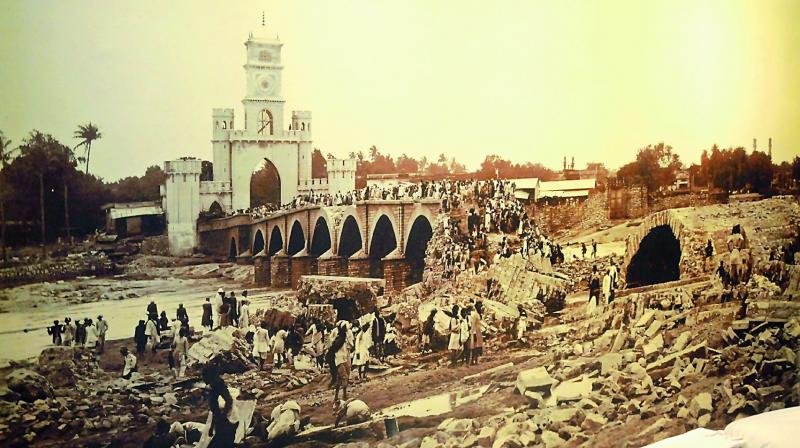
Central to Hyderabad’s life once upon a time, the Musi River supported farms, settlements and livelihoods along its banks. Over time, pollution and sewage discharge damaged the river, making large parts of it resemble a drain now.
The Musi Rejuvenation Project seeks to reverse this. The plan focuses on restoring the entire 55-kilometre stretch of the river that flows through Hyderabad.
Around 39 new sewage treatment plants (STPs) will ensure that wastewater is treated before it reaches the Musi. Being built under AMRUT 2.0 by HMWSSB at ₹3,849 crore to stop untreated sewage, the STPs have ~970 MLD capacity. Flood protection measures will allow the river to safely carry large volumes of rainwater. The aim is to bring back a flowing, healthy river.
The aim is to bring back a flowing, healthy river.
A Major Landmark
Gandhi Sarovar & the River Confluence
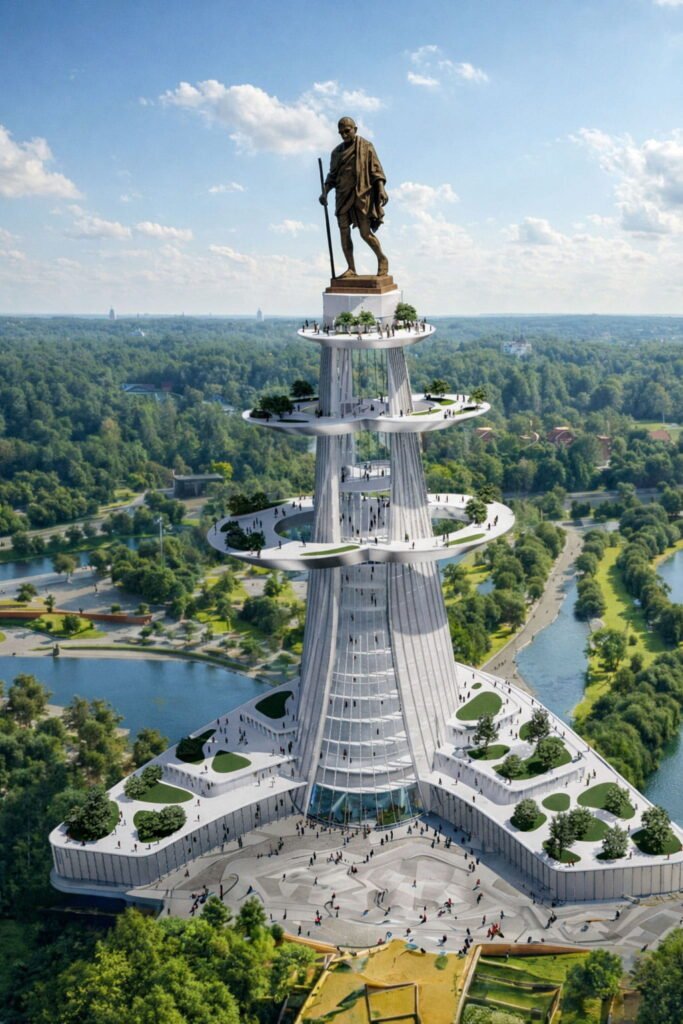
Gandhi Sarovar near Bapu Ghat will be a key highlight of the project, as it’s the point where streams from Osman Sagar and Himayat Sagar meet to form the Musi.
The plan includes a 200-acre Gandhi campus with a grand statue, cultural spaces, and public parks. A check dam will maintain water levels, while Godavari waters will be linked to ensure continuous flow, creating a Triveni Sangam-like confluence.
Osman Sagar and Himayat Sagar will also be restored as part of the project.
200 - Acre Campus
Near Bapu Ghat, where two streams meet to form the Musi, a 200-acre Gandhi Sarovar campus will emerge; A cultural and public space inspired by Gandhian ideas, it will feature a grand statue, cultural spaces, parks, and open areas accessible to residents and visitors.
Triveni Sangamam
Water from the Godavari River will be linked here, creating a symbolic confluence of three water sources. Osman Sagar and Himayat Sagar reservoirs will also be restored as part of the project.
Check Dam & Flow
A check dam will maintain continuous water levels at the Sarovar, ensuring the Musi flows with purpose through the city throughout the year.
Implementation
Phase-wise restoration plan
From pollution control to riverfront development, the project unfolds in structured phases across the 55 km Gandipet-Gowrelli corridor.
Phase I · Underway
Upstream restoration (21 km)
The first phase covers Osman Sagar, Himayat Sagar and Bapu Ghat, roughly 21 kilometres. A detailed project report (DPR) has been prepared. Key components include desilting, sewage interception, new STPs, flood embankments and public green spaces.
- River desilting
- Sewage interception
- New STPs
- Flood embankments
- Gandhi Sarovar development
Phase II · Upcoming
Mid-city corridor extension
Later phases extend restoration across the full river corridor through Hyderabad, including infrastructure improvements, widening of the river channel and stricter industrial discharge monitoring by environmental agencies.
- Channel widening
- Industrial monitoring
- Lake restoration
- Drainage reopening
Phase III · Future
Riverfront development & urban renewal
Once the river is restored, its banks transform into vibrant public spaces including parks, walkways, cafes, cultural venues, water-based tourism, and a night-time economy creating new opportunities for local businesses.
- Public walkways
- Cultural spaces
- Water tourism
- Night economy
- Improved road links
"

FUNDING & INSTITUTIONAL SUPPORT
Backed by global institutions led by Telangana
The project is implemented by the Musi River Development Corporation Limited (MRDCL), established by the Telangana government to lead the rejuvenation effort.
The Asian Development Bank has given in-principle approval for a ₹4,100 crore loan for the initial phase. The Telangana government is also exploring national river conservation programme support from the Government of India.
ADB Funding (Phase I)
₹4,100 Cr
In-principle approval (~$500M)
Total Estimated Investment (Phase I)
₹7,000 Cr
Full corridor rejuvenation
Implementing Body
MRDCL
Musi River Development Corporation Ltd.
Technical Advisory
CSIR-NEERI
Recharge shafts, drain monitoring, groundwater